
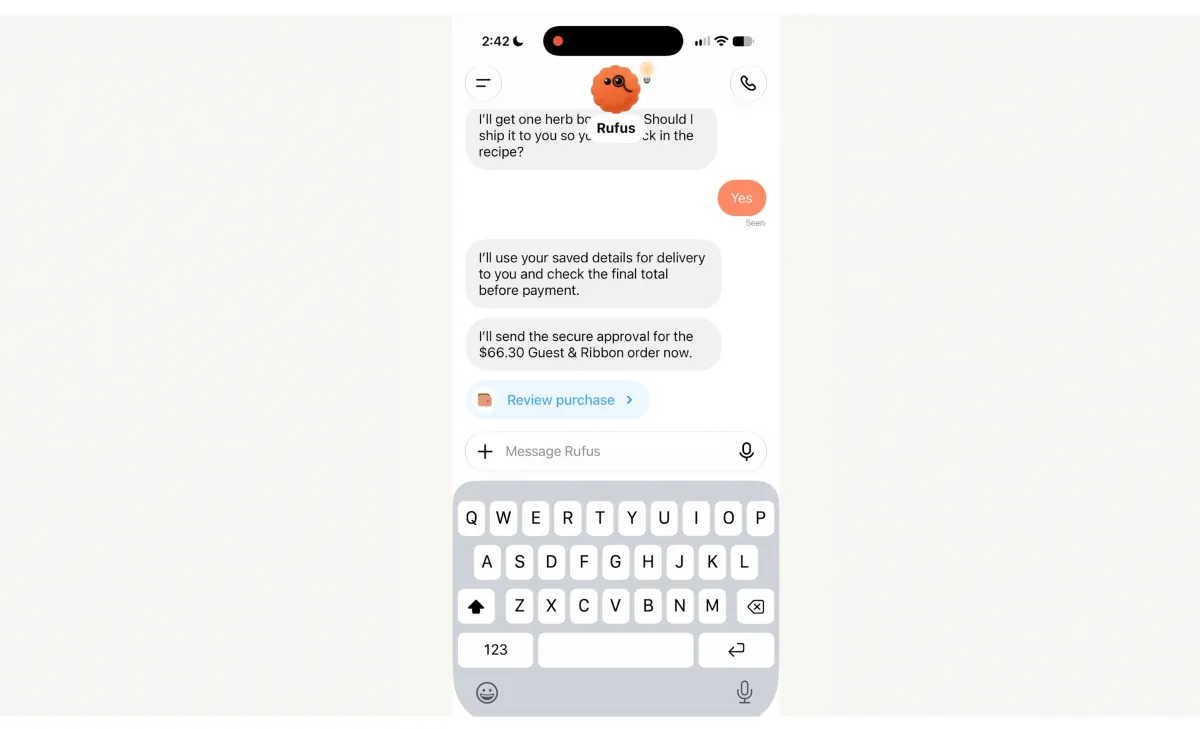
OpenAI officially opened ChatGPT Wallet on 13 November 2026, giving “dots” AI agents a way to complete purchases on a user’s behalf without ever handing them the underlying card number.
The launch matters because it marks a practical step toward agentic commerce rather than a preview. ChatGPT Wallet will initially be available through dots for ChatGPT Pro subscribers in the US. Before each purchase, the user reviews the items, the total, and the selected card, then approves it with a security check such as Face ID or a fingerprint scan. The merchant receives what it needs to fulfil the order, including shipping address and contact information, while the real card details are never shared with the agent or the merchant.
OpenAI built the wallet in partnership with American Express, Mastercard, and Visa. The bank networks contribute their payment systems and token schemes, so a purchase routes through the merchant’s normal checkout instead of OpenAI holding a new stored payment credential. Until now, a dot that found a sweater or a hotel room still needed a human to finish checkout. With Wallet, users save a card once, and the agent pays through the merchant’s existing checkout.
Security is anchored in a per-purchase approval loop. OpenAI says the wallet is the first to let agents pay without access to users’ actual card details and to require a security check for every purchase. Existing card rewards and protections are preserved for eligible disputes. The company also published a Commerce Partner Playbook, a guide for retailers adapting to agentic commerce, covering how sites can avoid blocking agents and how payment and risk systems should recognise legitimate purchases made by agents.
The timing is deliberate. OpenAI blocked AI agents on 11 November 2026, six days before the Wallet launch. That short pause matters: it shows the company is deliberately separating two halves of agentic commerce. One half is removing automatic access; the other is adding a governed payment path once a human has signed off.
Availability is narrow at first. The wallet launches with limited availability for ChatGPT Pro users, so OpenAI can learn from real-world use and work with businesses, banks, and payment networks to improve compatibility and reliability. The partner playbook is the first public signal of where OpenAI wants to end up: merchants and payment systems that treat an agent’s purchase as a normal checkout, not as something to block.
For Indonesian readers, the Jakarta-based version will matter most later. OpenAI’s description is US-first at launch, which is normal for a payments product and means the feature is not yet a local test case. But it does put a question on the table for the wider market: agentic payments will be judged as much on approval mechanics and fraud controls as on whether an agent can find a product. The wallet is a useful, bounded first step, not a complete answer to that question.
Bottom line: ChatGPT Wallet is OpenAI’s first official agentic payment product, built with Amex, Mastercard, and Visa, and it starts as a small, human-approved experiment in the US before it can become a general payment layer. For more information, see OpenAI’s announcement, the TechCrunch report, and ChatGPT’s agentic commerce product page.
Sumber https://openai.com/index/introducing-chatgpt-wallet https://techcrunch.com/2026/11/13/chatgpts-new-wallet-lets-ai-agents-shop-and-check-out-for-you https://www.cnbc.com/2026/11/13/openai-chatgpt-wallet-dot-purchases.html https://www.bloomberg.com/news/articles/2026-11-13/openai-debuts-new-chatgpt-payment-method-with-card-networks